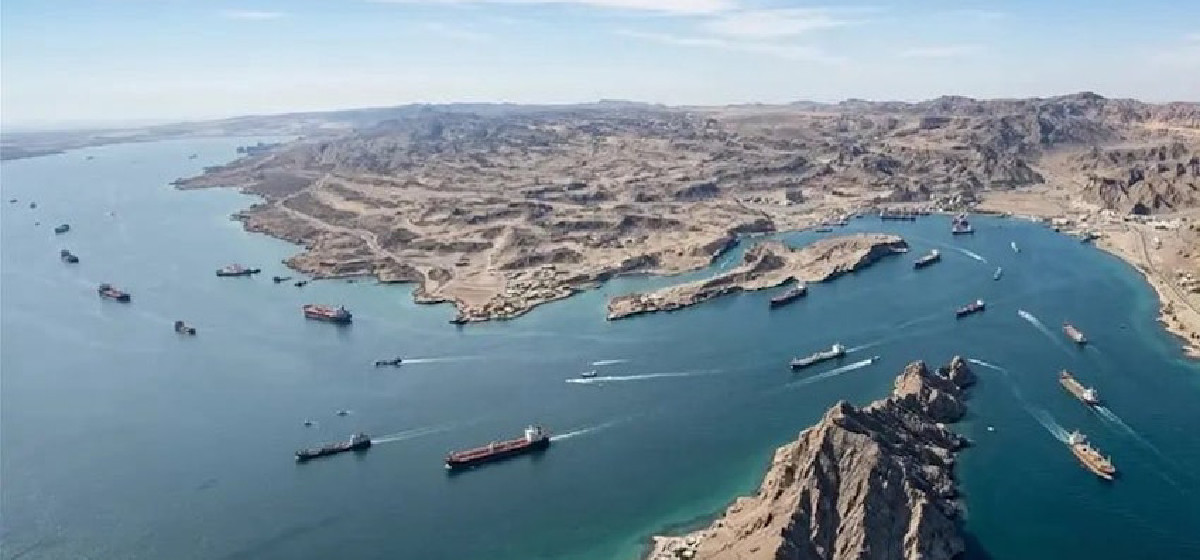
Iran has further tightened its control over the strategically vital Strait of Hormuz, one of the world’s most sensitive maritime routes for global energy supply. Under the new measures, all international vessels must obtain prior authorization before passing through the waterway.
According to Iran’s state-run Press TV, under the new system, shipping companies transiting through Hormuz will be required to receive electronic instructions from authorities under the Persian Gulf Strait Authority (PGSA). These instructions will include updated regulations, navigational standards, and mandatory compliance conditions that all vessels must follow.
Under the new protocol, ships must obtain a “transit permit” before entering the strait. Iranian state media has described the system as an exercise of sovereign authority aimed at strengthening control over this strategic maritime passage.
The move follows recent remarks by Iranian Parliament Speaker Mohammad Bagher Ghalibaf, who referred to a “new equation” being implemented regarding maritime control. He had previously accused the United States and its allies of threatening energy supply security through ceasefire violations and blockades.
Ghalibaf claimed that Iran has not yet fully activated its strategic measures but suggested that Washington is already under pressure due to current developments.
Meanwhile, the Islamic Revolutionary Guard Corps (IRGC) Navy has also tightened its regional presence, issuing fresh warnings to commercial vessels. The IRGC instructed ships to strictly adhere to designated routes, warning that any deviation could lead to military action.
According to state media, the IRGC has declared that the designated corridor for vessels passing through Hormuz is the “only safe route.” Any attempt to deviate from it would be considered unsafe and could face decisive intervention.
The developments come amid rising regional tensions following recent comments by U.S. Defense Secretary Pete Hegseth, who said that American efforts to protect commercial shipping in the area are separate from other military activities.
Iran has steadily increased its maritime control measures since late February. As the Strait of Hormuz remains a key route for global crude oil and liquefied natural gas shipments, any disruption could pose significant risks to global energy markets and international trade, raising concerns worldwide.