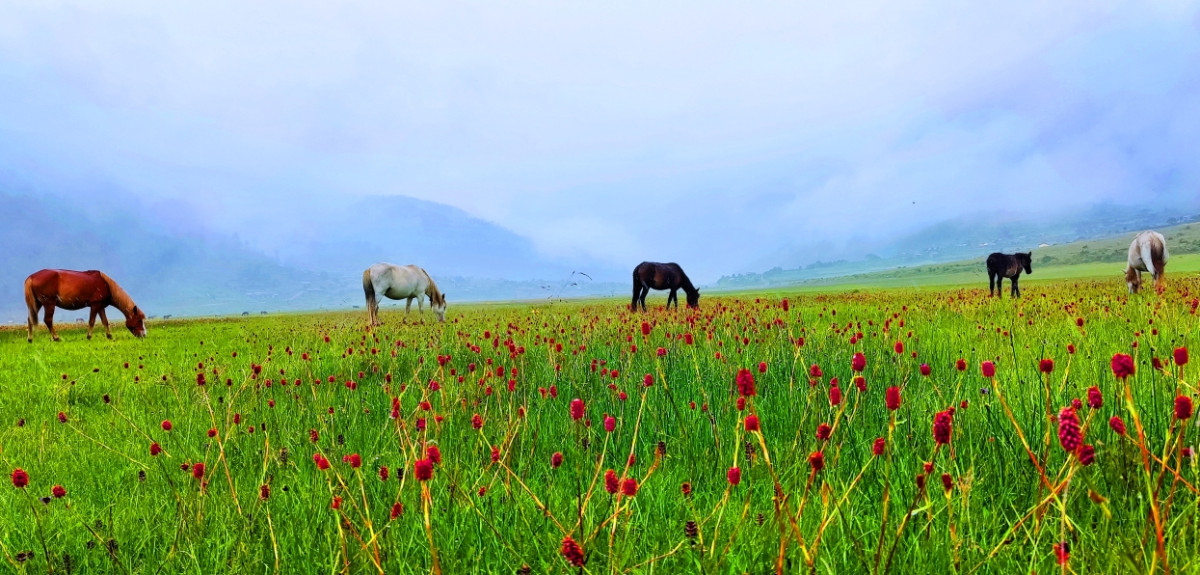
Baglung - Dhorpatan Valley in western Nepal has transformed into a vibrant paradise as wildflowers burst into full bloom this monsoon season. Blanketed in hues of red, yellow, violet, and pink, the vast meadows have become a magnet for both domestic and international tourists seeking natural beauty and tranquility.
Once a lesser-known destination, Dhorpatan primarily saw visitors only during the Janai Purnima festival when devotees flocked to the revered Dhorbaraha Temple. Back then, few noticed the wildflowers covering the meadows. But times have changed.
With the growing influence of social media and increased media coverage, the colorful wildflowers-locally known as Rakeful-have become the highlight of the region. Tourists now make dedicated trips to Dhorpatan just to experience the flower-filled pastures, especially during the rainy season when the area is at its most picturesque.
According to hoteliers and tourism entrepreneurs, over 200 tourists visit the valley each day during peak flowering season, many eager to capture Instagram-worthy photos and videos among the blossoms.
The Dhorpatan Hunting Reserve has identified the flowers by various names, including Nakefuli, Bukiphool, and Madanephool, though locals have long referred to them collectively as Rakeful. The flowers bloom extensively across the pastures, where livestock such as horses, sheep, and cattle graze freely. Interestingly, local herders claim that animal dung actually helps these wildflowers grow more vibrantly.
Tourism entrepreneurs like Dhirendra Gharti Magar say the valley’s floral charm has completely shifted how visitors experience Dhorpatan. “In the past, tourists came just for the temple. Now they come to wander through the meadows and enjoy the flowers. It’s become the main attraction,” he shared.
With the influx of flower-loving tourists, hotels, homestays, and lodges have sprung up across the region. Gharti Magar emphasized the need for conservation, saying, “These wildflowers were once overlooked. But now, they draw thousands of visitors. Without proper protection, they could be at risk.”
Concerns are also growing about the impact of unmanaged tourism. According to Jivan Pun, Chairperson of the Dhorpatan Hotel Entrepreneurs’ Committee, unregulated vehicle movement in the meadows is damaging the flowers. “Compared to last year, the number of blooming flowers has decreased,” he said, noting that the past three years have seen a decline in flower density.
Despite the rough 32-kilometer road from Burtibang to Dhorpatan, the valley continues to attract nature lovers, especially during mid-June to early September when the flowers are in full bloom.
Among the visitors is Akash Giri from Butwal, who said he was amazed by the valley's beauty. “It’s so hot back home, so we came here for a week. We saw videos of Dhorpatan’s flowers on social media and decided we had to visit. When we finally arrived, it felt like paradise,” he said. “Though the road from Burtibang is quite rough, the experience among the flowers is totally worth it. It’s unfortunate that such a beautiful place still lacks proper development.”
Daily, around 50 tourists hike up to Bukipatan, a higher meadow located about five hours on foot from the main Dhorpatan Valley. Travelers now often visit in groups, enjoying the scenery and photographing the flowers as part of their nature getaway.
Locals, who have lived in the area for generations, are astonished by the sudden popularity. “Years ago, no one cared about the flowers. Now, everyone walks into the meadows, picks flowers, and takes photos. Tourism has brought life to our hotel business,” said one resident.
As Dhorpatan blooms with color and visitors, the wildflowers have undeniably become the heart of a growing eco-tourism movement in this once-quiet corner of Nepal.