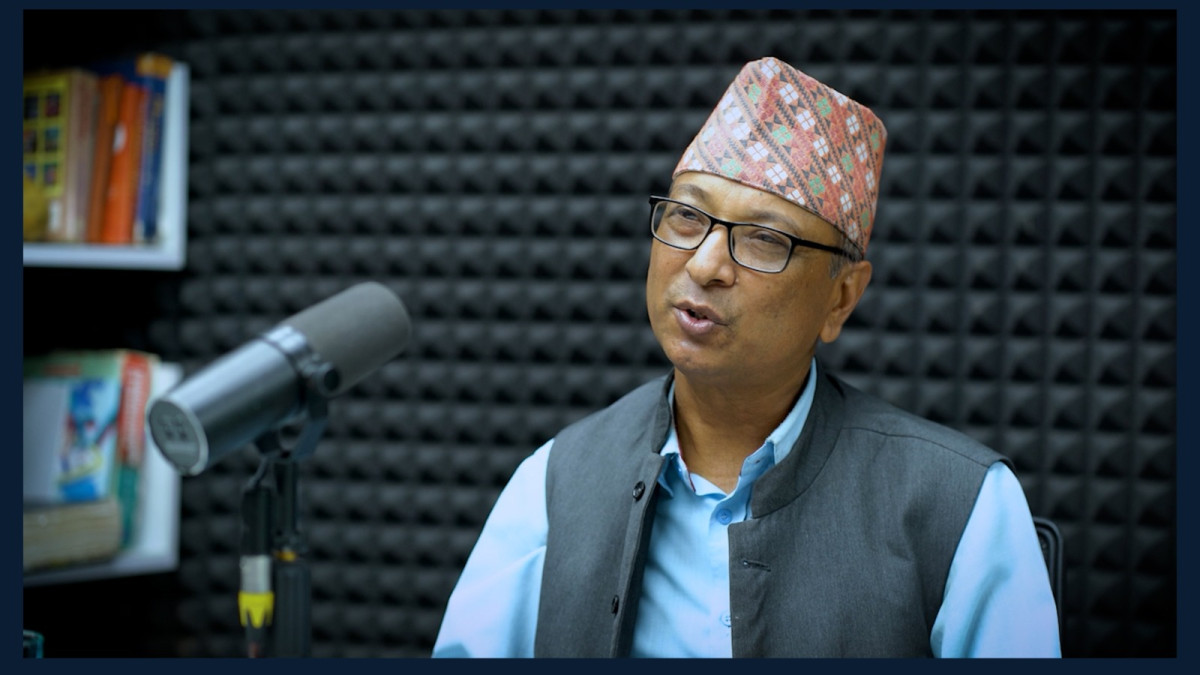
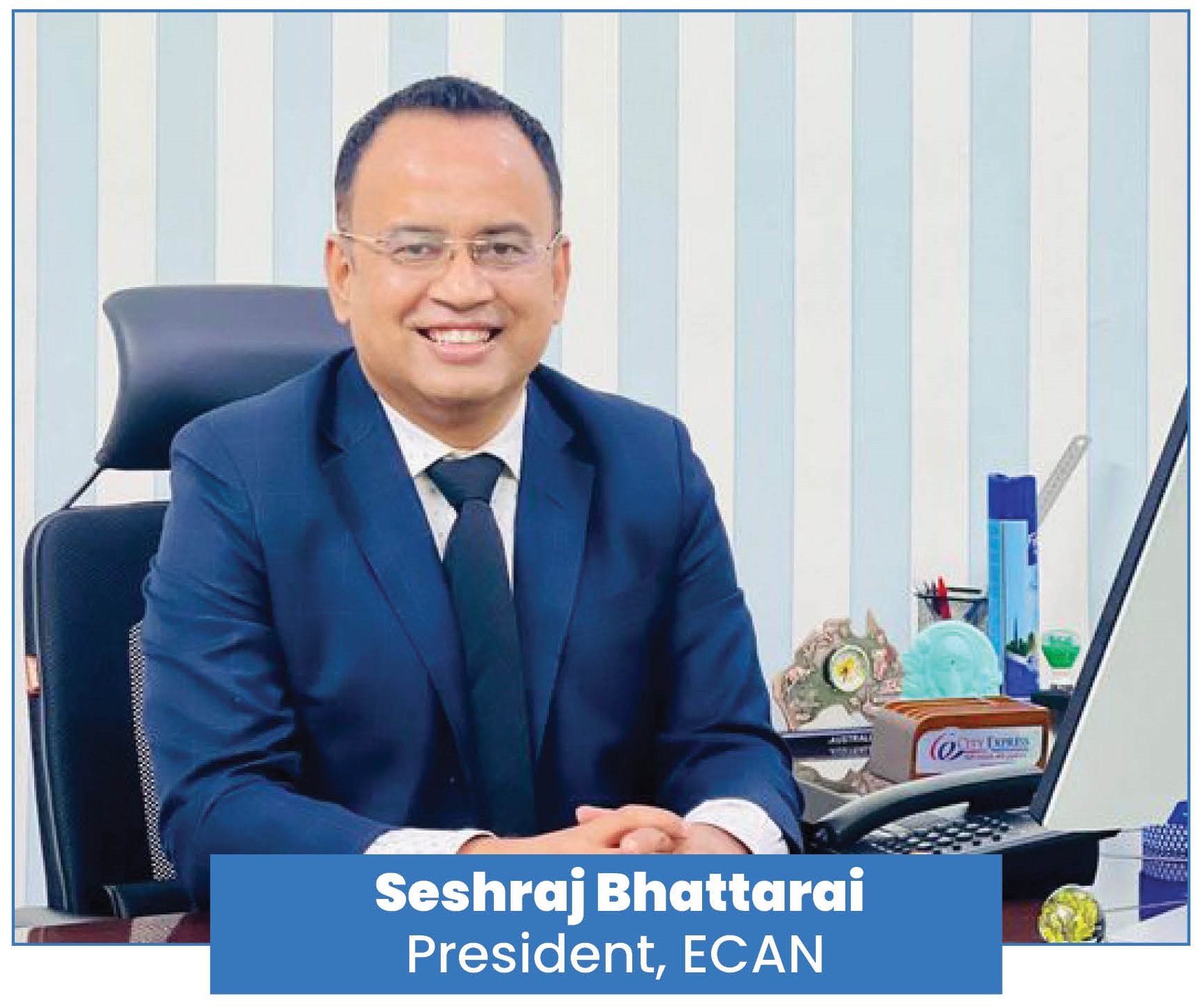
Key Insights from the Conversation with Shesh Raj Bhattarai, President of the Nepal Educational Consultancy Association (ECAN)
How do you assess the current state of the educational consultancy sector in Nepal?
The global mobility of Nepali students-the growing trend of pursuing education abroad-has emerged as a new and significant phenomenon for Nepal. After COVID-19, nearly one hundred thousand Nepali students leave the country every year in pursuit of higher education and international opportunities. Nepal’s international education market is also transforming rapidly, driven by evolving student aspirations, changing visa regulations, and frequently shifting education policies in destination countries.
Despite these challenges, Nepal continues to be an attractive destination for students and international universities alike. The counselling approach itself has now fully transformed, adopting a meaningful and legally compliant system. The ethical commitment of ECAN members has helped make the entire sector more responsible and sustainable.
How do you view the growing number of students going abroad each year?
The rise in foreign study should be seen as an opportunity for Nepal to participate in the global competitive arena. The flow of human capital worldwide has intensified, and it is natural for Nepali youths to seek quality education and global skill-building opportunities. This mobility can greatly contribute to shaping a knowledge-based economy. If students returning home can effectively utilize the skills, exposure, and innovation they acquire abroad, it can significantly strengthen Nepal’s economic and technological landscape.
Therefore, outbound mobility must be safe, organized, and evidence-based. Responsible counsellors play a crucial role in guiding students toward informed decisions. With appropriate counselling, global mobility can serve as a strategic instrument for nation-building.
What programs has ECAN been conducting for consultancies and students planning to go abroad?
Since its establishment, ECAN has been operating with the objective of making the educational consultancy sector structured, competent, and accountable. Our role is not limited to membership or registration management; we focus on long-term capacity-building, effective implementation of the code of conduct, student awareness programs, and international collaboration.
Each year, ECAN conducts more than fifty trainings, seminars, workshops, interaction programs, and corporate dialogues across various provinces and cities. These initiatives have significantly enhanced professionalism, transparency, and service quality among consultancies.
For students, ECAN’s programs are even more direct and impactful. Free counselling camps help students with subject selection, university selection, and career guidance. Orientation programs on NOC, CEO, and visa processes provide students and parents with accurate and transparent information regarding legal procedures, documentation, and timelines.
Considering rising cases of fraud, misinformation, and forged documents, ECAN has also prioritized awareness programs on fraud prevention and safe application practices.
What steps should the government take to make the educational consultancy sector more responsible and organized?
The government’s first step should be to formally and positively recognize this sector, acknowledging its direct connection to youth career decisions, skill development, labor mobility, and foreign income. Strong coordination among the Ministry of Education, Ministry of Foreign Affairs, Department of Immigration, Labor-related agencies, diplomatic missions, and universities worldwide is essential.
Without recognizing the sector’s contribution in guidance, documentation, transparency, and international linkages, it is impossible to establish uniformity and discipline in the industry. Nepal urgently needs a specific Act, regulations, and technical guidelines for this sector. Existing laws are partial, unclear, and inconsistent with real-world practices, leading to confusion in registration, renewal, responsibilities, penalties, and regulation.
Policy-making must be based on data, not assumptions. Currently, Nepal lacks any centralized data system on student numbers, destination countries, visa approval rates, provincial activities, or risk areas. This gap directly affects policy-making, student safety, and industry credibility. A modern data system, digital tracking, and mandatory reporting would make the industry transparent and research-driven.
Forged documents, misinformation, and misleading marketing are serious challenges today. To address this, Nepal must introduce online verification systems such as license authentication, counsellor certification, and institutional accreditation. This will strengthen trust among students, parents, consultancies, and the government.
If these reforms are implemented through coordinated efforts between the government, industry bodies like ECAN, and the business community, Nepal can quickly emerge as the most organized, transparent, and credible student source country in South Asia.
What major challenges have businessmen in this sector faced during your leadership of ECAN?
The educational consultancy industry is inherently dynamic, constantly affected by global politics, destination countries’ visa policies, and universities' internal strategies. The challenges we faced fall into two categories: external challenges arising from global circumstances and internal challenges related to regulation and coordination.
The biggest external challenge is the frequent policy changes among destination countries such as Japan, Australia, the UK, Canada, and the US. These uncertainties force consultants to constantly update, reinterpret, and adapt to new rules—often requiring significant time and resources. The spread of unverified information and rumors further intensifies instability. Baseless claims like “visas have stopped” or “rules have become strict” create panic among students, parents, and even industry professionals. In such situations, factual, evidence-based communication becomes essential.
Internal challenges include rising digital fraud, fake documents, poor counselling, and commission-driven unethical practices. Such behavior weakens industry credibility. Another challenge is the uncontrolled increase in new consultancies due to unclear laws and weak regulation, resulting in unprofessional and inexperienced operators entering the market.
Poor coordination among government bodies has also been a recurring issue. Despite needing daily interaction with the Ministry of Education, Ministry of Foreign Affairs, embassies, and other agencies, inconsistency in communication and procedures creates unnecessary administrative hurdles.
Amid these challenges, ECAN’s leadership prioritized two areas: evidence-based counselling and strengthening ethical standards. We have consistently engaged in data-driven dialogue with the government, embassies, and destination countries to promote clarity and transparency. At the same time, we have worked toward making the industry more professional, disciplined, and credible.
What is your view regarding the upcoming leadership of ECAN?
Leadership transition in ECAN is a natural process and an opportunity to shape the future of the organization. My tenure has concluded successfully, and now we aim to move forward with a team that is vibrant, capable, and result-oriented. My priority is to help develop a consensus-based, competent leadership that makes decisions based on vision, collaboration, and transparency, not personal interests or positions.
Such leadership must be capable of steering the industry, addressing challenges, and keeping students at the core of every decision. Even after completing my tenure, I will continue to give ECAN my full commitment. Today, Nepal holds a central position in the global education market, and ECAN is not just an association—it is the institution that defines the direction of the entire consultancy industry.
If the new leadership remains steadfast in vision, cooperation, and transparency, ECAN can make Nepal the most capable, organized, and student-centered consultancy structure in South Asia. Such leadership will reinforce ECAN’s mission and ensure long-term impact and effectiveness.