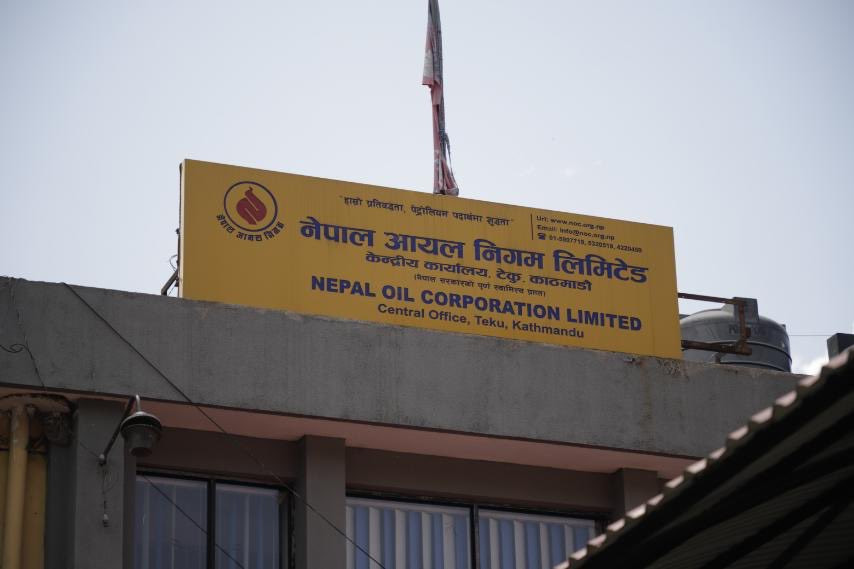
The Nepal Oil Corporation (NOC) has clarified that retail fuel prices in the domestic market are determined based on the international prices of refined petroleum products.
The corporation stated that claims comparing Nepal’s fuel prices with crude oil prices and suggesting overpricing are misleading and have no factual basis.
According to NOC, Nepal does not have its own refinery and therefore imports refined petrol and diesel directly instead of crude oil. As a result, price comparisons should be made with refined petroleum products rather than crude oil, said spokesperson Manoj Thakur.
NOC has been importing petroleum products from the Indian Oil Corporation (IOC). Prices received from IOC are used to adjust fuel prices in Nepal every 15 days.
According to NOC data, on April 16, 2026, crude oil was priced at USD 99.6 per barrel, petrol at USD 139.3, and diesel at USD 228.1 per barrel. On April 2, 2026, crude oil reached USD 118.3 per barrel, while petrol and diesel rose to USD 262.0 and USD 334.4 per barrel respectively.
Under normal conditions, the price gap between crude oil and petrol is around USD 10, and between crude oil and diesel around USD 20. However, recent international conditions have widened this gap significantly to about USD 144 and USD 216 respectively, the corporation stated.
NOC further noted that customs duties, taxes, transportation, insurance, storage, and service charges also affect the final retail price.
Recently, on April 3, Nepal increased the price of diesel/kerosene by NPR 30 per litre and aviation fuel by NPR 5 per litre. Despite this adjustment, the corporation is still incurring a loss of around NPR 99.16 per litre on diesel.
Spokesperson Thakur said that with continuous price increases in the international market, the corporation is facing an estimated loss of around NPR 5.75 billion every 15 days.