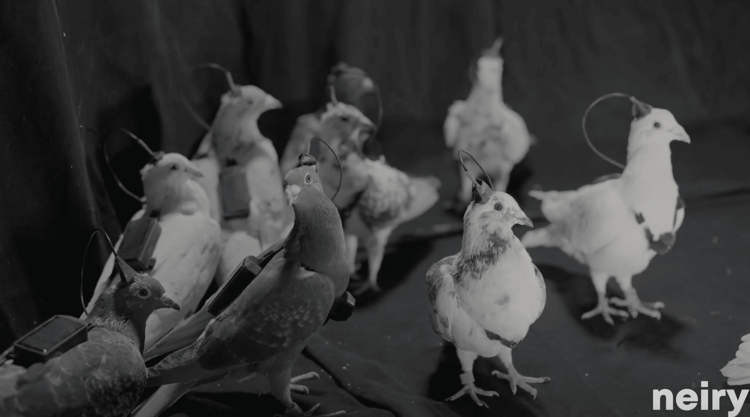
KATHMANDU - A Moscow-based startup called Neiry has claimed that birds, particularly pigeons, can be more effective than modern drones, unveiling an unusual technology that turns living birds into so-called “bio-drones.”
According to the company, pigeons were chosen over machines because they do not rely on batteries, can fly even in harsh weather conditions, and are capable of reaching remote or difficult terrains with ease.
To control the birds, Neiry has developed a system that involves implanting a special device into the pigeon’s brain. The technology uses tiny electrodes placed inside the brain, connected to a stimulator mounted on the bird’s head. A small backpack fitted with solar panels is attached to the bird’s back, housing a controller and other electronic components, while a surveillance camera is mounted on the chest.
The controller receives pre-loaded flight instructions similar to those used in drones. Based on electrical impulses sent by the stimulator, the pigeon is guided to turn left or right during flight.
Neiry founder Alexander Panov claims that the birds require no prior training. He says that once the chip is implanted through surgery, any animal can theoretically be turned into a radio-controlled unit.
The company further claims that a single pigeon can fly up to 500 kilometers in a day without recharging, something that is nearly impossible for conventional drones. After pigeons, Neiry plans to experiment with larger birds such as crows, seagulls, and albatrosses.
While the startup says the bio-drones are intended for industrial inspections and search-and-rescue operations, experts have raised concerns about possible military and surveillance use. In particular, fears have been expressed that in countries like Russia, such technology could be used for covert spying.
However, skepticism remains. Given that several Russian technological projects in the past have failed to meet their claims, many observers doubt whether Neiry’s “Pigeon-1” project will be as effective in practice as the company suggests.